Industrial facilities that operate under demanding pressures, hazardous media, or strict safety expectations often require valves that allow complete pipeline isolation and controlled venting. The Double Block and Bleed Ball Valve is one such answer. It is often used in oil and gas, petrochemical, power, and offshore systems in the area. UAE Valves and other companies offer Double Block and Bleed valves made for system separation, leak detection, maintenance preparation, and operational security. This blog discusses the design, operating features, technical criteria, and uses in various industrial contexts of a Double Block and Bleed Ball Valve.
Understanding Double Block and Bleed Ball Valve
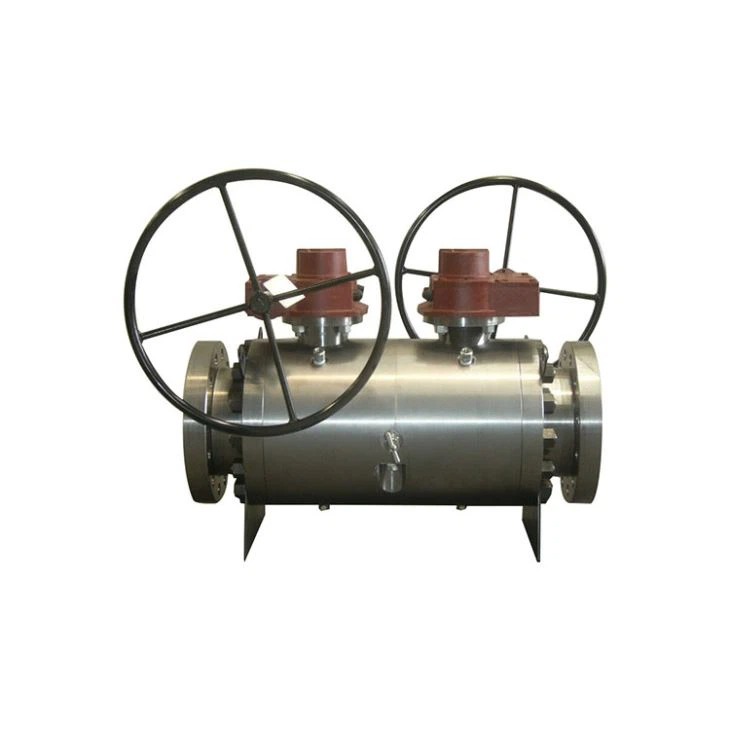
A Double Block and Bleed ball valve is a specialized valve configuration designed to provide two seating barriers (double block) with an additional bleed mechanism positioned between them. The purpose is to fully isolate a section of the pipeline while allowing the cavity between the two seats to be depressurized or vented.
Primary Functions:
- Complete pipeline isolation
- Vent, purge, or drain cavity pressure
- Increased shutdown precision
- Enhanced safety for maintenance personnel
Design Features
Double Block and Bleed ball valves differ from standard ball valves mainly in their internal structure and the level of isolation they deliver.
- Dual Seating Arrangement:
Consists of two independent seats that block flow from both upstream and downstream sides. - Central Bleed Port:
A vent outlet located between the two block seats to release trapped pressure. - Single or Twin Ball Construction:
Some DBB valves use one ball with double-seal seats, while others use two balls with a shared bleed cavity. - Compact Integrated Body:
Manufactured as a single valve body to reduce flange connections and minimize potential leak points.
Types of Double Block and Bleed Ball Valve
Double Block and Bleed ball valves come in multiple configurations depending on construction, application standards, and operation style.
- Single Ball, Double-Seated Double Block and Bleed Valve
- Twin Ball Double Block and Bleed Ball Valve
- Trunnion-Mounted Ball Double Block and Bleed Valve
- Floating Ball Double Block and Bleed Valve
- Threaded, Flanged, and Weld-End Double Block and Bleed Valves
- Top-Entry and Side-Entry Double Block and Bleed Valves
Operational Differences
| Features | Double Block and Bleed Ball Valve |
| Isolation Level | Double Barrier |
| Bleed Option | Yes |
| Safety Level | Higher due to cavity venting |
| Applications | High-risk and critical operations |
| Seat Functions | Dual shutoff with cavity monitoring |
Functional Sequence of a Double Block and Bleed Ball Valve
- Valve in Closed Position
- Both internal seats move into the sealing position.
- Flow is blocked on both sides of the pipeline.
- Bleed Stage Activation
- The bleed port between the two seats is opened.
- Any trapped fluid or pressure is vented.
- Verification of Isolation
- The absence of flow or pressure confirms that shutoff is complete.
- This prevents accidental process continuation during maintenance.
- Maintenance or Inspection Phase
- With the cavity depressurized, technicians can safely work downstream or upstream.
- Valve Reopening
- The bleed port is closed.
- The ball rotates to its open position, restoring process flow.
Flow Characteristics and Mechanism
Double Block & Bleed ball valves are engineered to optimize flow behavior in complex pipeline environments.
Flow Characteristics:
- Full Bore Flow Path:
Reduces pressure drop across the valve. - Tight Shutoff Capability:
Dual seats eliminate backflow even under fluctuating pressures. - Low-Turbulence Flow:
Round, streamlined passage ensures smooth flow with minimal resistance.
Mechanism Highlights:
- Ball Rotation (90° turn) controls open/close action.
- Independent seat movement permits isolation from high-pressure sides.
- Cavity venting ensures pressure equalization and safety.
Technical Data and Specifications
| Body Materials | Carbon Steel (A105), Stainless Steel (SS304, SS316), Duplex/Super Duplex (F51, F55), Alloy Steels (F11, F22, F91), Nickel Alloys (Inconel, Monel, Hastelloy) |
| Seat Materials | PTFE, Nylon, Delrin, Elastomer-based options |
| Ball Materials | SS316, Duplex, ENP-coated carbon steel, Hard-chrome plated steel |
| Seat Materials | SS316, Alloy steel, Inconel X750 for high stress |
| Gasket Materials | PTFE, Graphite, Viton, NBR, HNBR, AFLAS |
| Class Ratings | ANSI Class 150 to 2500 |
| Temperature Range | –29°C to 200°C (varies by seat type) |
| Pressure Range | Up to 6000 psi |
| Testing Standards | API 6D, API 598, ISO 5208, Fire-Safe testing (API 607, ISO 10497) |
When to Choose a Double Block and Bleed Ball Valve?
A Double Block and Bleed valve can be chosen when:
- You require high-level process isolation.
- Pipeline maintenance or modification needs zero-flow conditions.
- You need pressure verification between isolated sections.
- Operating in hazardous environments such as hydrocarbons, gas, or volatile fluids.
- Space is limited but high-performance isolation is required (integrated body saves space).
What Certifications Should I Look for in UAE-Approved Double Block and Bleed Valve?
The following certificates are frequently reviewed in order to satisfy the demands of UAE industrial, offshore, and energy sectors:
- API 6D certification is important for pipeline valves.
- API 607 / ISO 10497 – Fire safe accreditation
- PED (Pressure Equipment Directive) – Europe
- Required for explosive areas is Atex Certification.
- Manufacturing quality control under ISO 9001
- SIL (Safety Integrity Level) – applicable to safety-critical systems
These certifications help to guarantee that the valve meets operational expectations anticipated throughout UAE’s oil & gas, energy, and petrochemical industries.
Industrial Applications of Double Block and Bleed Ball Valve
Double Block and Bleed ball valves are widely used in industries where safety, system isolation, and controlled shutdown are critical.
- Oil & Gas Pipelines
- Refineries and Petrochemical Plants
- Offshore Platforms
- Power Generation Systems
- Cryogenic and LNG Facilities
- Chemical Processing
- Water Injection Lines
- Metering and Instrumentation Systems
Why do industries prefer Double Block and Bleed valve over traditional isolation methods?
Industries choose Double Block and Bleed valves because they offer:
Advantages in Critical Operations:
- Reduced number of valves required
- Quicker verification of isolation
- Lower installation weight compared to dual-valve assemblies
- Cavity venting ensures inspection accuracy
- Preferred in automated systems for remote operation.
Double Block and Bleed ball valves play an essential role in pipeline isolation, pressure handling, and safe operational shutdown across UAE’s oil & gas, petrochemical, and power sectors. They are ideal for harsh conditions since their dual-seat design, cavity venting system, and extensive compliance with testing criteria like API 6D, API 598, and fire-safe certificates set them apart. Double Block and Bleed valves are a sophisticated option for companies needing regulated process control without being constrained to any one kind of valve arrangement, whether used for leak detection, pressure balancing, or maintenance isolation.