Working with a well known Valve Supplier in Dubai gives operators access to precision engineered valve solutions built to handle high pressure, abrasive media, and critical industrial flow conditions.
UAE Valves supplies lubricated and non-lubricated plug valves for oil and gas, chemical processing, water treatment, and industrial applications in Dubai, Abu Dhabi and Middle East.
This blog explains the key differences between lubricated vs non-lubricated plug valves, how each type works, and how to select the right plug valve for your system.
What is a Plug Valve?
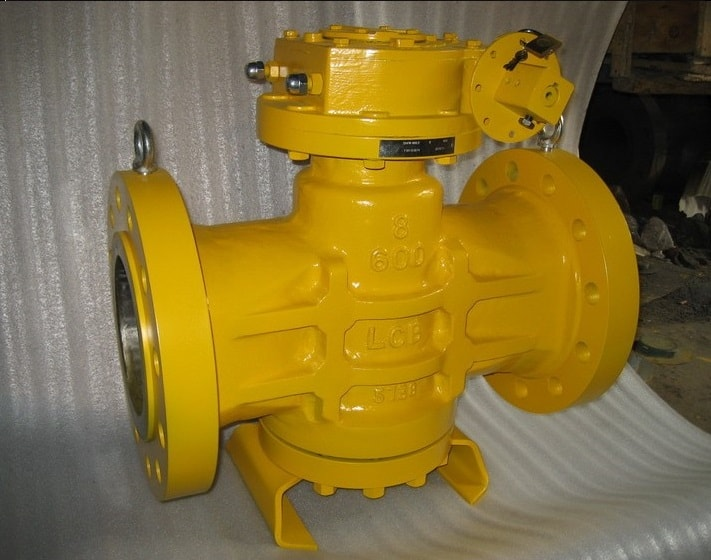
A plug valve is a quarter turn rotational valve controlling flow through a cylindrical or tapered plug with a central bore. Flow is unrestricted when the bore matches the pipeline. A 90 degree rotation totally arrests the flow.
Handling liquids, gases, slurries, and slightly abrasive media, plug valves are quite often used for on-off flow control in industrial pipelines. Multi-port designs for flow diversion and direction control abound as well.
There is a significant variation between designs lubricated and not. Directly impacts pressure handling capacity, maintenance demands, contamination risk, and sealing performance.
What is a Lubricated Plug Valve?
A lubricated plug valve creates a sealing film between the valve body and plug using a sealant injection system.
A center hole in the valve’s plug is where the sealant is introduced. The seating surface is covered by radial holes through which this sealant flows, creating a continuous lubricating layer.
This design offers several key advantages:
- Lower operating torque during valve turning
- Prevents internal surfaces from corroding
- maintains strong sealing even in high pressure environments
- Lets for online maintenance without taking the valve off.
Because the sealant continuously restores the sealing interface, lubricated plug valves are ideal for high pressure plug valve applications and abrasive media service .
What is a Non-Lubricated Plug Valve?
A non-lubricated plug valve uses a non-metallic sleeve or liner to seal rather than a sealant.
The conical plug pushes against the sleeve, forming a firm seal while not adding any lubrication to the process stream. Due to its high fluid purity, it is perfect for uses where fluid purity is essential.
Key advantages include:
- No possibility of sealant contamination
- Less maintenance is needed
- Clean operation for delicate systems
- Appropriate for use in water, gas, and chemical environments
The sleeve also prevents debris accumulation, improving reliability in clean fluid and gas distribution systems .
Key Differences Between Lubricated and Non-Lubricated Plug Valves
| Parameter | Lubricated Plug Valve | Non-Lubricated Plug Valve |
| Sealing Mechanism | Sealant through grooves and radial holes | Non-metallic sleeve |
| Friction Reduction | Lubrication film | Sleeve contact |
| Maintenance | Requires periodic sealant injection | Minimal maintenance |
| Contamination Risk | Possible if sealant is incompatible | No contamination risk |
| Pressure Capability | High pressure service | Moderate pressure service |
| Operating Torque | Lower | Slightly higher |
| Best Use | Abrasive and high pressure media | Clean fluids and gas systems |
Understanding these differences is essential for selecting the right industrial plug valve for specific applications.
Technical Specifications of Plug Valves
| Parameter | Lubricated Plug Valve | Non-Lubricated Plug Valve |
| Size Range | 1/2 inch to 24 inch | 1/2 inch to 14 inch |
| Pressure Class | Class 150 to 2500 / PN10 to PN450 | Class 150 to 2500 / PN16 to PN63 |
| Materials | WCB, CF8, CF8M, Alloy 20, SS316, Duplex | WCB, CF8, CF8M, SS316, SS316L |
| End Connections | Flanged, Butt Weld, Socket Weld, Threaded | Same as lubricated |
| Operation | Manual, Gear, Pneumatic, Electric | Same as lubricated |
These specifications must match system requirements for reliable performance in high pressure and industrial flow control systems .
Components of Plug Valve
In order to assess durability and maintenance needs, it is helpful to know the parts.
- Valve Body: provides structural support and pressure containment.
- A rotating device that controls flow through the bore is known as a plug.
- Seat: Establishes a seal between the plug and the body.
- The stem connects the actuator to the plug and transmits movement.
- Packing and Gland: Avoids leaks surrounding the stem.
- Fitting for Lubrication (Lubricated Type): Allows for the injection of sealant for lubrication and sealing.
- Sleeve (Unlubricated Type): Functions as a sealing and friction-reducing element.
Each component is designed to ensure performance in industrial plug valve applications.
Industries Using Plug Valves
Plug valves are widely used across industries requiring reliable flow isolation and control valves in Dubai, Abu Dhabi and Middle East.
- Oil and gas pipelines for high pressure and abrasive media
- Chemical and petrochemical processing for fluid handling
- Water and wastewater treatment for clean and sludge systems
- Natural gas distribution for safe and clean flow control
- Power generation for steam and condensate systems
- Mining and slurry handling applications
Correct valve selection ensures long-term reliability and reduces operational risks.
Key Engineering Considerations
Selecting between lubricated and non-lubricated plug valves requires real system analysis.
- Sealant Compatibility
In lubricated valves, sealant must match process fluid and temperature to prevent failure. - Pressure Surges
Pump start and stop cycles can create pressure spikes up to 2 to 3 times normal levels. Lubricated valves are better suited for such conditions . - Maintenance Access
Continuous plants require valves that can be serviced without shutdown. - Fluid Purity
For potable water and chemical systems, non-lubricated valves eliminate contamination risk.
Common Mistakes in Plug Valve Selection
- Using non-lubricated valves in severe abrasive applications at high pressure
- Choosing lubricated valves without making sure the sealant is compatible
- Ignoring circumstances of pressure surges
- Making a choice based solely on up front cost rather than total lifecycle cost
- Maintenance schedules for lubricated valves are ignored.
These mistakes lead to leakage, increased torque, and operational downtime.
Which Plug Valve Should You Choose?
When your application involves high pressure service, abrasive media, or requires on-line maintenance capabilities, select a lubricated plug valve.
Choose a non-lubricated plug valve if fluid purity is critical, maintenance access is limited, and the system manages clean fluid or gas distribution.
Making the correct decision will lower total operational expenses and assure long-term reliability.
Choosing between lubricated and non-lubricated plug valves is one of the most crucial engineering choices that affects system performance, maintenance expenses, and operational continuity.
Non-lubricated plug valves offer cleaner operation and less maintenance in sensitive applications, whereas lubricated plug valves have greater pressure capacity and longer lifespan in harsh conditions.
Working with one of the leading Valve Supplier in Dubai, such as UAE Valves, guarantees access to technically sound plug valve solutions in Dubai that adhere to industry norms and offer dependable performance in harsh industrial settings.