Even the most well-engineered valve will eventually show signs of wear or develop a fault if it is not properly maintained. In industrial settings across the UAE from oil and gas facilities on the offshore platforms of the Arabian Gulf to onshore water treatment plants and district cooling systems valve failure represent one of the most frequent causes of unplanned maintenance interventions and process disruptions.
At UAE Valve, we work with plant operators and maintenance engineers to help them understand the most common valve failure modes and put in place the right maintenance practices to prevent them. This guide covers the failures we see most often and the practical steps you can take to address them.
Gland Packing Leaks a Valve Failure
One of the most frequently encountered valve problems across all industries is leakage from the gland packing the sealing material that prevents fluid from escaping around the valve stem as it moves.
Gland packing is subject to constant wear every time a valve is operated, and it degrades gradually even when the valve is stationary due to heat, chemical attack, and compression set. The signs are usually clear: visible weeping or dripping around the stem, particularly after valve operation.
In many cases, a gland packing leak can be arrested temporarily by carefully tightening the gland nuts but this is only a short-term measure. Over-tightening can increase stem friction to the point where the valve is difficult to operate, and it does not address the underlying degradation of the packing material. The correct approach is to replace the packing with fresh material of the appropriate type for the service fluid and temperature.
Maintenance tip: Schedule packing inspections as part of your routine valve checks. On valves in high-temperature or chemically aggressive service, consider upgrading to higher-performance packing materials such as graphite-based composites or PTFE-encapsulated types, which offer longer service intervals.
Seat and Disc Wear
The seating surfaces of a valve where the disc, gate, ball, or plug contacts the seat ring to achieve shut-off are subjected to significant mechanical and fluid dynamic stress every time the valve operates. Over time, these surfaces erode and develop imperfections that prevent the valve from fully closing.
In throttling services, where a valve is held in a partially open position for extended periods, the high-velocity fluid passing through the restricted opening creates localised turbulence and cavitation that can rapidly erode seat and disc surfaces. Gate valves and globe valves are particularly vulnerable to this type of damage when used for throttling beyond their design intent.
Particles and debris in the process fluid also contribute to seat wear, particularly in water systems carrying suspended solids or in lines following maintenance where pipe scale has not been thoroughly flushed.
Maintenance tip: Never use gate valves for throttling service use globe valves or purpose-designed control valves instead. Implement regular seat integrity testing on isolation valves in critical service, using leak detection methods appropriate to the service pressure and fluid. Consider hard-facing seat surfaces with stellite or other wear-resistant alloys in high-erosion applications.
Corrosion and Erosion of Valve Bodies
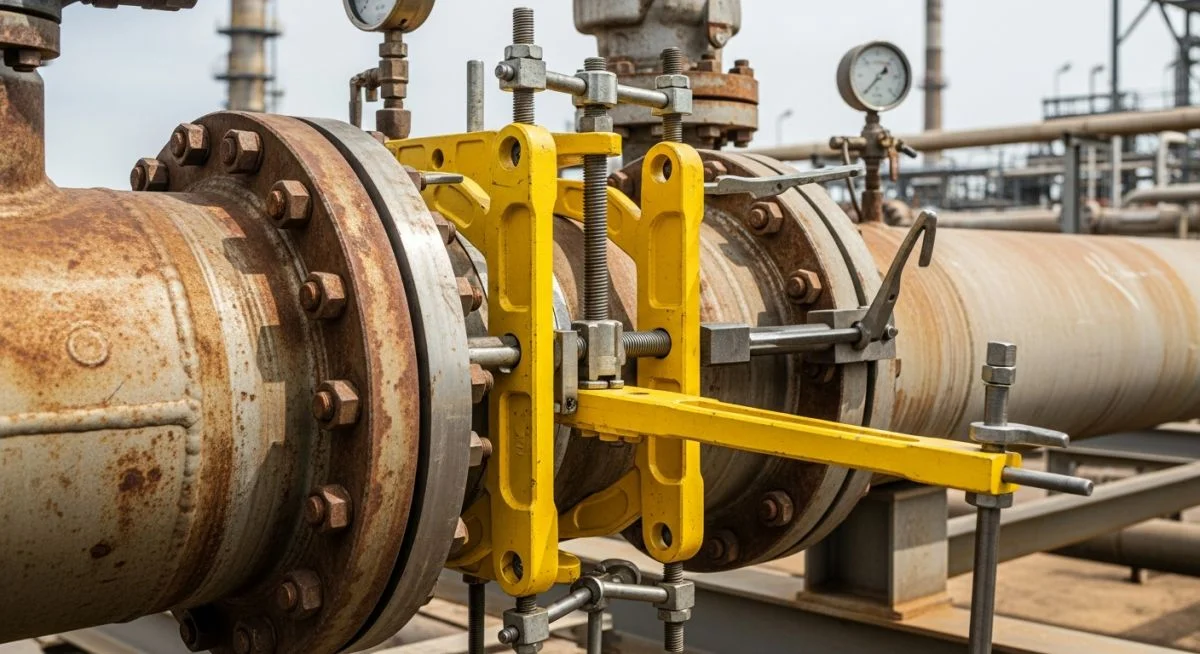
External and internal corrosion are persistent challenges in UAE industrial environments. Externally, valves in coastal or offshore locations are exposed to salt-laden air that can cause rapid surface rusting of carbon steel bodies and accelerate deterioration of external coatings. Internal corrosion is driven by the chemical nature of the process fluid seawater, acidic condensate, and oxygen-containing water are among the most aggressive.
Erosion is a related but distinct problem caused by the mechanical impact of fast-moving particles or high-velocity fluids wearing away valve body material and internal surfaces. It is most pronounced at areas of high turbulence immediately downstream of a partially open gate or in the throat of a globe valve.
Maintenance tip: Establish a corrosion monitoring programme for valves in aggressive service, using techniques such as ultrasonic wall thickness measurement to track metal loss over time. Apply high-quality external coatings and inspect them regularly, repairing damaged areas promptly before corrosion takes hold. For high-erosion applications, specify erosion-resistant alloy materials or internal linings at the valve selection stage.
Actuator Valve Failure
On automated valves, the actuator is the component responsible for opening and closing the valve in response to a control signal. Pneumatic actuators, the most common type in process plants, can develop problems with diaphragm cracking, spring fatigue, or air supply issues. Electric actuators may suffer motor failures, position sensor drift, or gearbox wear.
Actuator failures can result in a valve that is stuck open, stuck closed, or that fails to respond accurately to control signals, any of which can have serious operational consequences depending on the valve’s function.
Maintenance tip: Include actuator function tests in your routine maintenance schedule. Check actuator air supply pressure and filter condition for pneumatic types. Verify that electric actuators reach their full open and full closed positions correctly and that torque settings are within specification. Replace diaphragms on pneumatic actuators at the manufacturer’s recommended intervals rather than waiting for a failure in service.
Stem Seizure and Mechanical Binding
Valves that are left in the same position for extended periods particularly in outdoor installations in the UAE’s hot and humid coastal environment can develop stem seizure, where corrosion or the ingress of grit and debris causes the stem to bind in the packing or gland housing. When an operator then attempts to operate the valve, the resulting torque can shear the stem or damage the handwheel mechanism.
This is a particular risk for manual valves that are used infrequently, such as emergency isolation valves or seasonal bypass valves that may go months or years without operation.
Maintenance tip: Exercise all manual valves at least annually, open them to full and return them to their normal operating position. This breaks up any incipient corrosion and verifies that the valve remains operable when needed. Apply appropriate thread lubricants to stem threads on gate valves, and inspect stem protectors on outdoor valves to ensure they are intact.
Check Valve Failure to Seal
Check valves are designed to allow flow in one direction and prevent reverse flow. When a check valve fails to seal because of worn seat surfaces, a stuck disc, or debris lodged in the seat reverse flow occurs, which can damage pumps, cause process contamination, or in severe cases trigger water hammer events that damage pipework.
Check valve failures are particularly insidious because the valve is passive and has no external indication of its internal condition during normal operation. A check valve that appears fine from the outside may have a disc that no longer seals properly.
Maintenance tip: Where reverse flow prevention is critical, schedule periodic inspection or testing of check valves, particularly in high-cycling applications. In systems prone to debris in the flow stream, install strainers upstream of check valves to reduce seat contamination. Consider upgrading to spring-assisted check valve designs in applications where slow closure allows water hammer to develop.
Building a Proactive Maintenance Culture
The common thread running through all of these failure modes is that most of them can be detected early and addressed before they result in a significant operational incident provided that a structured, proactive maintenance programme is in place.
Reactive maintenance fixing valves only when they fail is invariably more expensive and more disruptive than a planned approach. Developing a valve maintenance register, setting appropriate inspection intervals for each valve based on its service conditions and criticality, and training maintenance personnel to recognise early warning signs are the foundations of an effective valve maintenance strategy.
For plant operators in the UAE managing ageing assets in demanding conditions, investing in valve health is one of the most direct routes to improved plant availability, reduced maintenance expenditure, and a safer working environment for everyone on site.
Valve failures are rarely sudden or unpredictable in most cases, the warning signs are there for those who know what to look for. Gland leaks, seat wear, corrosion, actuator faults, and stem seizure all develop gradually, and all can be caught early with a structured inspection and maintenance programme. The cost of proactive maintenance is consistently lower than the cost of reactive repairs, unplanned shutdowns, and the safety risks that come with in-service failures.
For plant operators across the UAE working in environments where heat, humidity, and aggressive process fluids accelerate deterioration, a disciplined approach to valve maintenance is one of the highest-return investments available. Keep your valves well-maintained, and they will keep your plant running.