Of all the steps involved in installing industrial pipework, flange alignment is one that is sometimes rushed or underestimated and one that can cause serious problems if not done correctly. Whether you are connecting a new valve into an existing pipeline or commissioning an entirely new process system, the quality of your flange connections directly affects the integrity, safety, and long-term performance of the entire installation.
At UAE Valve, our technical team regularly encounters situations where valve problems leaks, premature seal failure, body stress cracking can be traced back to poor flange alignment at the time of installation. This guide explains what proper flange alignment involves, why it matters, and how to get it right.
What is Flange Alignment?
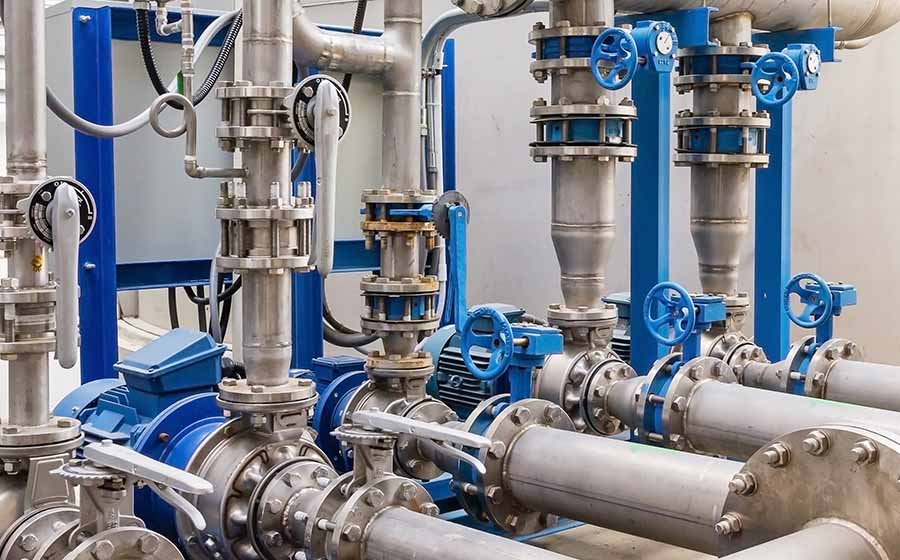
Flanged pipe connections join two sections of pipework by bolting together mating flanges flat, ring-shaped faces attached to the pipe ends or valve bodies. A gasket positioned between the two flanges provides the seal. For this connection to work effectively and safely, the two flanges must be properly aligned in several respects: they must be parallel to each other, centred on the same axis, rotationally aligned so the bolt holes match, and positioned at the correct face-to-face distance for the gasket being used.
Misalignment in any of these respects puts uneven stress on the gasket and on the valve or pipe being connected. Even small deviations from true alignment can significantly reduce gasket life, increase the risk of leakage, and in severe cases, introduce bending loads into valve bodies that can cause structural damage over time.
Types of Flange Alignment
Understanding the different forms misalignment can take helps in both prevention and diagnosis.
Angular misalignment occurs when the two flange faces are not parallel; one is tilted relative to the other. This causes uneven gasket compression, with the gasket under high stress on one side and insufficiently loaded on the other. The result is a connection that is prone to leakage under pressure cycling or thermal expansion.
Lateral (parallel) offset occurs when the two flanges are parallel but not coaxial; they are displaced sideways relative to each other. This makes it difficult to insert bolts cleanly, and when bolts are forced through misaligned holes, it introduces lateral stress into the joint.
Axial gap misalignment occurs when the face-to-face distance between the flanges is incorrect for the gasket thickness being used. Too large a gap leaves the gasket insufficiently compressed; too small a gap can crush the gasket, damaging it before the system even enters service.
Rotational misalignment where the bolt holes of one flange do not line up with those of the mating flange may seem like a minor issue easily resolved by rotating the pipe or valve, but forcing rotation can introduce torsional stress into the system if the pipework is already under strain.
Why Misalignment Is More Common Than You Might Think
In theory, flanged connections should always be aligned correctly. In practice, several factors conspire to make misalignment a common occurrence, particularly on complex pipeline systems.
Pipe fabrication and installation tolerances accumulate along the length of a pipeline. What starts as a minor deviation at one end of a spool piece can translate into significant misalignment by the time you reach the valve connection point several metres away. Thermal expansion during commissioning, when pipes first heat up to operating temperature, can shift pipe positions and alter flange alignment that appeared correct during cold assembly.
In retrofit projects where a new valve is being installed into an existing, aged pipeline pipe sag, corrosion, and the accumulated effects of previous repairs can all contribute to difficult alignment conditions. Ground settlement, vibration, and the weight of adjacent pipe fittings also play a role.
The Consequences of Getting It Wrong
The immediate consequence of a poorly aligned flange joint is often a gasket leak. In low-pressure water systems, this might initially appear as nothing more than a minor drip, annoying and wasteful, but not immediately dangerous. In high-pressure steam, gas, or chemical service, even a small leak can rapidly become a serious safety incident.
Beyond leakage, persistent misalignment causes accelerated gasket wear, shortening replacement intervals and increasing maintenance costs. For valves, the bending loads imposed by a misaligned connection can damage valve body castings over time, particularly at the flange neck. In the worst cases, this can lead to stress corrosion cracking in environments where the material is already under chemical attack, creating a failure mode that is difficult to predict and potentially catastrophic.
Bolt failure is another risk. When bolts are installed under lateral load from a misaligned joint, they experience bending stress in addition to tensile load, increasing the likelihood of fatigue failure during pressure cycling.
Best Practices for Achieving Proper Flange Alignment
Achieving proper flange alignment starts with careful pipework fabrication and continues through every stage of installation. Pipe spools should be fabricated to tight dimensional tolerances, with flange faces machined square to the pipe centreline. On site, pipe supports should be set at the correct height and position before valves or flanged fittings are bolted in place and never use the valve itself as a structural support for the weight of adjacent pipework.
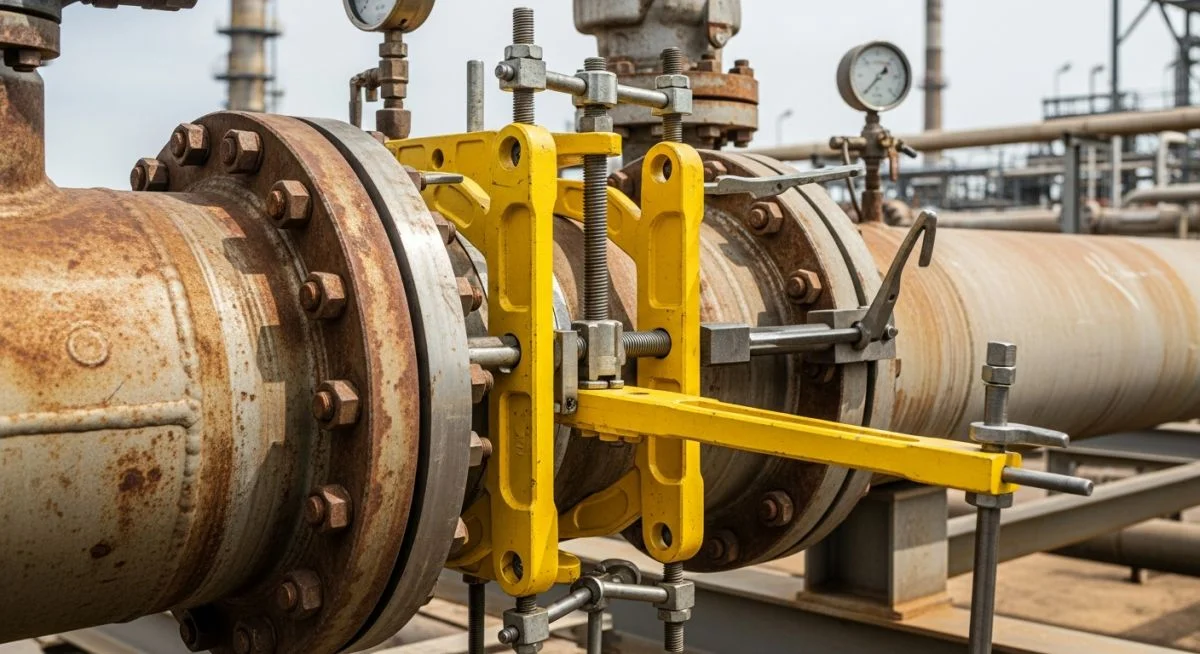
During assembly, flanges should be brought together by hand first, with bolts inserted finger-tight, before any force is applied. Gaps should be measured around the full circumference of the flange face to verify parallelism before tightening begins. If significant misalignment is present, the root cause should be identified and corrected not simply forced together by over-tightening bolts, which damages the gasket and loads the joint incorrectly.
Gasket selection also matters. For installations where some small degree of misalignment is unavoidable, a gasket material with good conformability can compensate for minor surface irregularities, though this is no substitute for correct alignment.
Bolt Tightening Procedure
Even when flanges are correctly aligned, improper bolt tightening can undermine the integrity of the joint. Bolts should always be tightened in a cross-pattern not sequentially around the circle to ensure even gasket compression. Multiple tightening passes are recommended, starting at low torque and progressing to the final specified torque in stages.
For critical services, torque wrenches or hydraulic bolt tensioning equipment should be used to achieve consistent bolt loads across all fasteners. Uneven bolt loading is a common cause of gasket blow-out, particularly on large-diameter flanges where the physical distance between bolts is significant.
The Long-Term Payoff of Getting It Right
Proper flange alignment takes time and attention to detail. It requires skilled workers, proper tooling, and a commitment to doing the job correctly rather than quickly. But the investment pays off in reduced maintenance costs, fewer leaks, longer gasket life, and the confidence that pipeline systems will perform safely and consistently throughout their service life.
For plant engineers and construction managers overseeing pipeline projects in the UAE, building flange alignment requirements into installation specifications and enforcing them during construction inspection is one of the most impactful quality controls available. The pipework that goes in correctly the first time is the pipework that stays trouble-free for years to come.
Flange alignment may not be the most headline-grabbing aspect of pipeline construction, but its impact on long-term system integrity is profound. A connection that is assembled correctly the first time with parallel faces, matched bolt holes, correct face-to-face spacing, and evenly loaded fasteners will perform quietly and without issue for years. One that is forced together under misalignment will announce itself through leaks, accelerated gasket wear, bolt failures, and in serious cases, structural damage to valves and pipework.
The investment in getting alignment right is modest compared to the cost of rectifying problems after commissioning. For anyone managing pipeline installation or maintenance in the UAE’s demanding industrial environment, flange alignment deserves to be treated as a non-negotiable standard, not an afterthought.