Water scarcity has long been one of the most pressing challenges across the Middle East, and the UAE stands at the forefront of tackling it head-on. With vast stretches of arid land and limited natural freshwater sources, the country has turned to large-scale desalination plants as a cornerstone of its water security strategy. At UAE Valves, we understand what it takes to keep these critical systems running at peak performance.
From the world-renowned Jebel Ali desalination complex to newer plants along the coast of Abu Dhabi and Dubai, industrial valves are the unsung heroes of every desalination facility, quietly managing flow, pressure, and safety across miles of high-demand pipework. Getting valve specification right in these environments is not a secondary consideration. It is one of the most impactful decisions made in the design and operation of any desalination plant.
Why Desalination Plants Demands Specialized Valve Technology
Desalination is not a forgiving process. The equipment operating inside these plants faces some of the most extreme conditions in industrial engineering. High-pressure reverse osmosis membranes, corrosive seawater, elevated temperatures, and continuous 24/7 operation leave minimal room for error. A standard valve that performs perfectly in a general water supply network may fail rapidly when exposed to the saline, chemically aggressive environment of a desalination plant.
The two primary desalination methods used across the UAE place distinct demands on valve performance. Multi-Stage Flash (MSF) distillation plants operate at high temperatures and require valves that can handle repeated thermal cycling without losing seal integrity. Reverse Osmosis (RO) systems, on the other hand, subject valves to extremely high pressures, often exceeding 70 bar, and require precise flow control to protect sensitive membranes from pressure spikes and sudden flow changes.
Types of Valve Used for Desalination Plants in the UAE
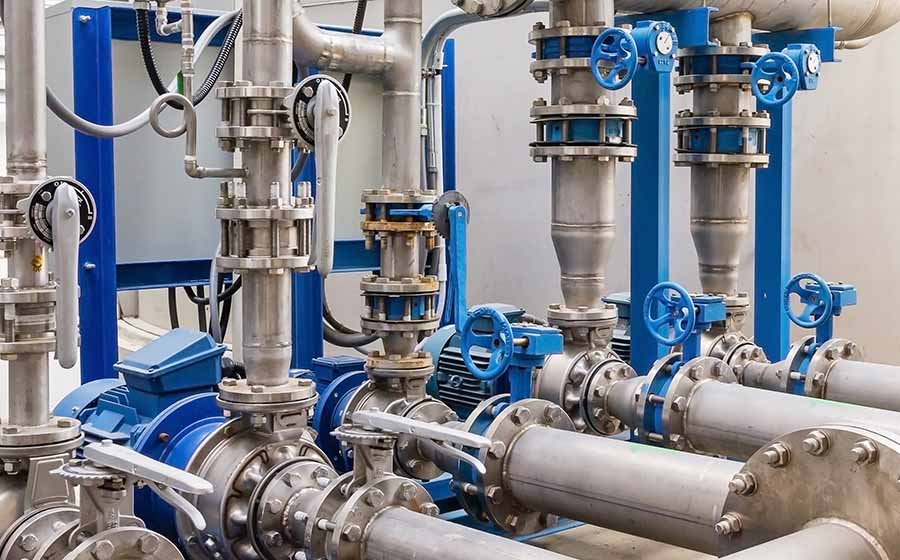
A well-designed desalination facility draws on several categories of valve, each selected for its specific capabilities in the context of the process stage it serves. Understanding what each valve type does and where it fits is the foundation of good valve specification for desalination applications.
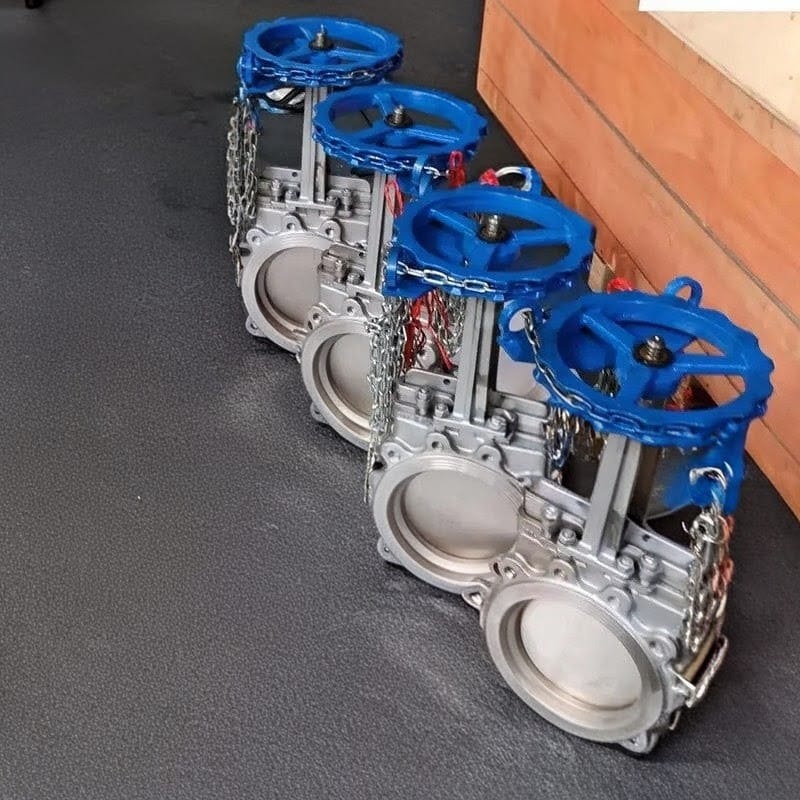
Gate Valves : Gate valves are among the most widely used isolation devices in desalination plant pipework. Their full-bore, low-resistance flow path makes them ideal for raw seawater intake lines and brine discharge systems where minimising pressure drop is a priority. Gate valves are designed for fully open or fully closed service and should not be used for throttling, as partial opening causes turbulence that erodes the gate and seats over time. In buried or underground pipeline sections, their robust design and minimal external sealing points make them a practical long-term installation.
Butterfly Valves : Butterfly valves are a preferred choice across large-diameter pipework in desalination plants, offering compact design and fast quarter-turn operation. They are widely used in brine recirculation loops, product water distribution lines, and cooling water circuits. High-performance double-offset and triple-offset butterfly valves provide improved seat integrity for higher-pressure applications. Their relatively low weight and cost compared to gate valves of equivalent diameter make them particularly practical in large plants where dozens or hundreds of valves are installed across transmission mains.
Ball Valves : Ball valves provide tight shut-off with minimal pressure drop and are commonly deployed in chemical dosing systems and high-pressure RO feed lines. Their quarter-turn operation allows rapid actuation, which is valuable in automated control applications where response time matters. For RO skid design, high-pressure ball valves in duplex or super duplex stainless steel are the standard specification, capable of handling feed pressures well above 70 bar while maintaining sealing integrity over extended service life.
Globe Valves : Globe valves allow precise flow regulation and are typically deployed at chemical injection points where exact dosage control is critical. Their design supports modulating service better than gate or ball valves, making them suitable for applications where flow needs to be varied continuously rather than simply switched on or off. In desalination plants, globe valves are also used in steam and condensate systems associated with MSF distillation processes, where flow and pressure control are central to maintaining efficient operation.
Check Valves : Check valves prevent backflow in high-pressure RO systems, protecting pump assemblies and membranes from reverse pressure surges that can cause serious mechanical damage. Silent check valves and dual-plate check valves on pump discharge lines are standard fittings in Gulf desalination facilities. These designs close smoothly as forward flow reduces, minimising the pressure transient associated with pump trip events. On large-diameter distribution mains, hydraulically damped slow-closing check valves prevent water hammer, which can cause structural damage to pipework and fittings if not properly controlled.
Best Materials for Seawater Valve Applications
Material selection is the single most important factor in determining valve service life in desalination environments. Seawater contains dissolved salts, chlorides, biological matter, and varying pH levels, making it one of the most corrosive substances encountered in industrial service.
Grade 316L stainless steel provides adequate protection in lower-chloride environments and in product water service, but in direct seawater contact or brine systems, superior alloys are required. Super duplex stainless steel, such as SAF 2507, offers exceptional resistance to chloride-induced pitting and crevice corrosion and is widely specified for valve trim and body components in seawater and brine applications. Titanium alloys are used in the most aggressive service conditions, providing outstanding corrosion resistance combined with good mechanical properties. Duplex stainless steel represents a practical intermediate option, offering better corrosion resistance than standard austenitic grades at a lower cost than super duplex.
For valve body external surfaces, protective coatings including fusion-bonded epoxy and rubber lining provide an important secondary barrier against environmental corrosion. Cathodic protection systems are used in buried and immersed installations to further extend valve service life.
Valve Solutions for Reverse Osmosis Systems
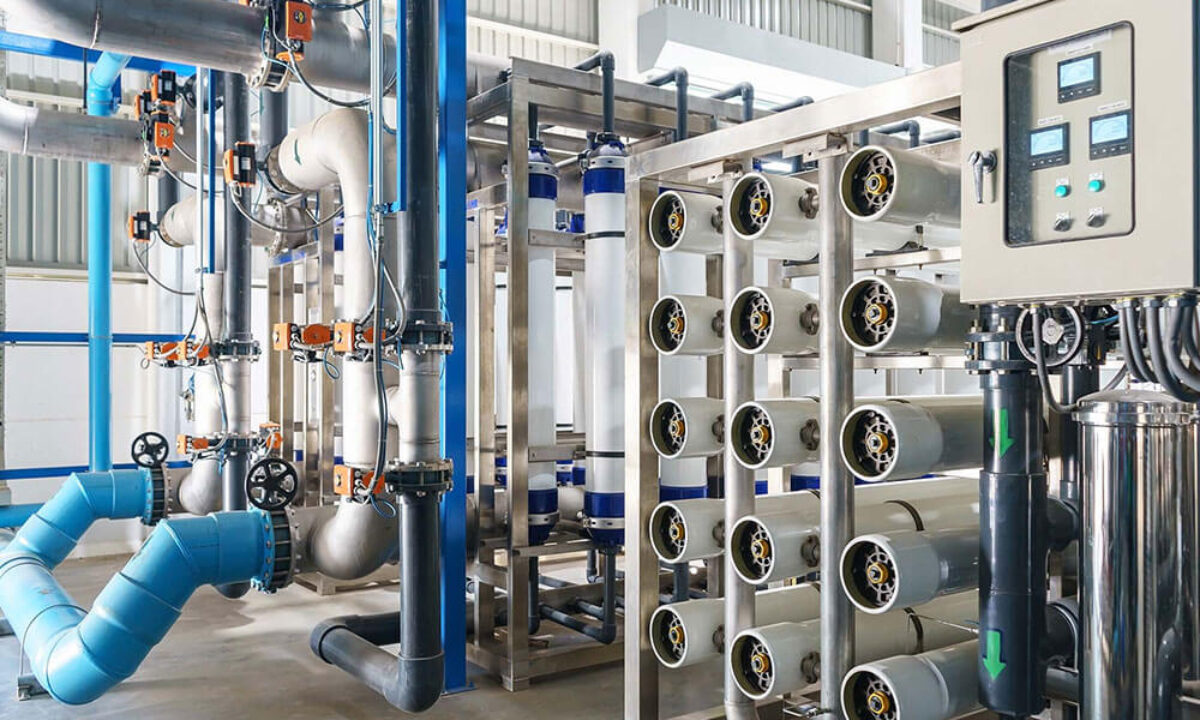
Reverse osmosis is a pressure-driven process that forces seawater through semi-permeable membranes at very high pressure to separate fresh water from dissolved salts. This makes pressure management one of the central engineering challenges in any RO plant, and valves are fundamental to achieving it.
High-pressure ball valves and needle valves are central to RO skid design, controlling feed pressure and protecting membranes from potentially damaging pressure transients. Energy recovery devices, which capture pressure energy from brine discharge and use it to boost incoming feed pressure, also depend on precise valve sequencing for effective and efficient operation.
Automatic control valves, in both pneumatically and electrically actuated configurations, maintain stable operating conditions across the RO process. In large RO plants, hundreds of automated valves are networked into central SCADA control systems, enabling remote monitoring, automated alarm response, and optimised energy management. Getting valve selection right in RO applications is directly connected to membrane protection, energy efficiency, and the consistency of product water quality.
Maintenance Strategies for Long Valve Life
Even the highest-quality valves require a structured maintenance programme to deliver the service life that desalination environments demand. The combination of constant operation, aggressive fluids, and high pressures means that wear is inevitable. The key is managing it proactively rather than responding reactively after failures occur.
Preventive maintenance schedules should include regular inspection of valve seats and seals, packing replacement for gland-sealed valves, actuator function testing, and corrosion assessment of external surfaces. Ultrasonic wall thickness measurement identifies metal loss from internal corrosion or erosion before it reaches critical levels. Pressure testing can reveal early signs of seat wear before a minor leak develops into a significant operational issue.
For critical isolation valves on high-pressure RO lines, many plant operators maintain an inventory of spare valves and actuators to enable rapid like-for-like replacement during planned shutdowns, minimising the duration of planned outages and eliminating the risk of an unplanned extended shutdown caused by unavailability of replacement parts. A well-structured maintenance programme, supported by accurate records of valve inspection history and maintenance actions, is one of the most effective tools available for maximising plant availability and minimising lifecycle cost.
The UAE’s desalination infrastructure is an engineering achievement that the nation’s water security depends on daily. Valves are at the core of keeping that infrastructure operational, managing pressure, preventing contamination, enabling automation, and withstanding some of the harshest fluid conditions in any industrial setting. Choosing the right valve type, specifying the correct materials for seawater service, and maintaining those valves through a structured programme are not optional extras. They are fundamental requirements for any plant that needs to perform consistently and safely over the long term.
As the UAE continues expanding its desalination capacity to meet growing urban and industrial demand, the role of high-quality, correctly specified valve technology will only become more important. New projects are incorporating advanced energy recovery systems, smarter automation architectures, and higher-capacity RO trains, all of which place greater demands on the valves that serve them. Partnering with a supplier who understands both the technical requirements and the local operational context is one of the most impactful decisions a plant operator or project engineer can make in ensuring that a desalination facility delivers on its promise for decades to come.